The media

Lost highway
Lost Highway (1997) is a neo-noir psychological thriller directed by David Lynch. It tells the story of Fred Madison, a jazz musician who begins receiving mysterious videotapes that show the inside of his home while he sleeps. After his wife is murdered, Fred undergoes a bizarre transformation in prison, where he literally becomes another man, a young mechanic named Pete. The film then follows Pete’s life, which slowly unravels into violence, betrayal, and paranoia.
The movie doesn’t follow a straight timeline instead, it loops back on itself, blending dream logic with reality. It’s often described as a meditation on guilt, identity, and the inability to escape one’s own psychological torment. The tone is dark, unsettling, and surreal, with themes of alienation, repression, and rage simmering under the surface.
It’s also famous for its unsettling atmosphere, shadowy visuals, disjointed editing, and an eerie industrial soundtrack (with contributions from Nine Inch Nails). Rather than offering clear answers, Lost Highway creates a feeling of being trapped in a nightmare that never ends.
My take
In Dylan Klebold’s journal, there are entries where he writes about feeling like he’s trapped in loops of despair, unable to escape his thoughts, constantly circling back to isolation, rejection, and fantasies of transformation or release. Lost Highway mirrors this same psychological pattern: the main character, Fred, literally transforms into someone else in order to escape guilt and pain, but eventually the cycle closes in on him again.
When Dylan wrote about his hopelessness, his hatred of being “stuck in humanity,” and his desire to “change” or disappear into another existence, it parallels the fragmented identities and looping nightmare of Lost Highway. The film’s atmosphere surreal, alienating, and violent feels almost like a cinematic reflection of the tone of his feelings here.
For Dylan, the movie may have resonated because it depicted a character who tries to escape himself but can’t. Just as Fred/Pete spirals deeper into paranoia and violence, Dylan wrote about being unable to escape his own pain, except through death or destruction.
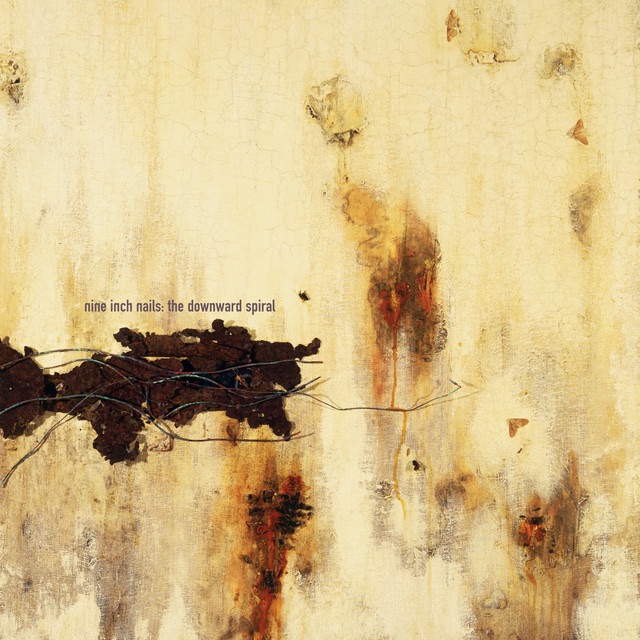
Nine Inch Nails is the industrial rock project founded by Trent Reznor in 1988. NIN became one of the defining acts of the 1990s alternative scene. The music often blends electronic beats, distorted guitars, and raw emotional vocals.
“Piggy” (1994)
“Piggy” appears on Nine Inch Nails’ landmark album The Downward Spiral (1994). Unlike some of the heavier tracks on the record, it has a slower, almost hypnotic beat, but the lyrics are blunt and seething.
“Piggy”
Hey pig
Yeah you
Hey pig piggy pig pig pig
All of my fears came true
Black and blue and broken bones
You left me here, I’m all alone
My little piggy needed something new
Nothing can stop me now, ’cause I don’t care anymore
Nothing can stop me now, ’cause I don’t care
Nothing can stop me now, ’cause I don’t care anymore
Nothing can stop me now, ’cause I just don’t care
Hey pig
Nothing’s turning out the way I planned
Hey pig
There’s a lot of things I hoped you could help me understand
What am I supposed to do?
Lost my shit because of you
Nothing can stop me now, ’cause I don’t care anymore
Nothing can stop me now, ’cause I don’t care
Nothing can stop me now, ’cause I don’t care anymore
Nothing can stop me now, ’cause I just don’t care
Nothing can stop me now
Nothing can stop me now
Nothing can stop me now
Nothing can stop me
Nothing can stop me now
Nothing can stop me now
Nothing can stop me now
Nothing can stop me
Nothing can stop me now
Nothing can stop me now
Nothing can stop me now
Nothing can stop me
Nothing can stop me now
Nothing can stop me now
Nothing can stop me now
Nothing can stop me now
Nothing can stop me now
Nothing can stop me now
Nothing can stop me now
Nothing can stop
You don’t need me anymore
My take
Nine Inch Nails’ “Piggy” likely resonated deeply with Dylan Klebold because it mirrors the emotion he goes over on these pages. The song opens with feelings of hurt, betrayal, and isolation:
“all of my fears came true / black and blue and broken bones / you left me here, I’m all alone”
This reflects Dylan’s sense of rejection by peers and unfulfilled expectations. The repeated mantra, “nothing can stop me now, ’cause I don’t care anymore,” parallels his cyclical, obsessive rumination and hints at the numbness and nihilism he describes when contemplating suicide as a form of relief. Themes of resentment toward others and loss of control match his frustrations with social alienation, monotony, and his inability to reconcile his internal world with the external one.
Next page will be my psychoanalysis by Freud.
 Echoes in the Columbine Archive
Leave a comment