In the years following the Columbine High School massacre, Jefferson County District Attorney David J. Thomas proposed conducting a “psychiatric autopsy” of the perpetrators, Eric Harris and Dylan Klebold, in an effort to better understand the motivations behind the attack and identify warning signs that might help prevent future acts of violence. The project was carried out by the Threat Assessment Group (TAG), a private team of forensic psychiatrists and behavioral experts led by Park Dietz.
The investigation later received financial backing from the A&E television network, which agreed to fund the research in exchange for rights to produce a documentary about the project. The resulting program, Investigative Reports: Columbine – Understanding Why, aired on April 15, 2002.
Correspondence from the early 2000’s I’ve gotten ahold of inspired me to do this write up, including a letter sent by the project’s research director to associates(I have redacted the name of the associate, but I can confirm their identity) of Harris and Klebold requesting interviews, provides new insight into how the psychiatric autopsy project was organized, the questions researchers hoped to answer, and the methods they planned to use. This write up reconstructs the origins and timeline of the Columbine Psychiatric Autopsy Project using contemporary reporting and primary documents. It also examines the criticism and skepticism that surrounded the project when it was released in 2002.
Key People and Organizations
Threat Assessment Group (TAG)

The Threat Assessment Group was a private consulting firm specializing in the assessment and prevention of targeted violence. The organization was founded in 1987 by forensic psychiatrist Park Dietz and was based in Newport Beach, California.
The firm brought together specialists in forensic psychiatry, psychology, criminology, and threat assessment. Its work focused on analyzing violent behavior and advising institutions on how to manage risks related to threats, stalking, workplace violence, and other forms of targeted attacks. The group frequently consulted for corporations, government agencies, schools, and law enforcement organizations.
TAG also conducted behavioral analyses in major criminal investigations and legal proceedings. Dietz and his colleagues were involved in evaluations or consultations in several high profile criminal cases in the United States.
Park Dietz

Park Dietz (born 1948) is an American forensic psychiatrist and the founder of the Threat Assessment Group. Dietz has spent much of his career studying violent behavior and evaluating criminal offenders, and he has frequently served as an expert witness in criminal trials involving questions of mental health and criminal responsibility.
Dietz received his medical degree from the University of Michigan and completed psychiatric training at Johns Hopkins University, where he later served on the faculty. His work has focused on forensic psychiatry, a field that applies psychiatric expertise to legal issues, including the assessment of violent offenders, criminal responsibility, and risk of future violence.
Throughout his career, Dietz has consulted on or provided expert analysis in a number of high profile criminal cases involving violent offenders, including cases associated with individuals such as Jeffrey Dahmer, John Hinckley Jr., and Ted Kaczynski.
David J. Thomas

By Robert Tomsho
Staff Reporter of The Wall Street Journal
June 4, 1999 at 2:07 am ET
David J. Thomas served as the District Attorney for Colorado’s First Judicial District, which includes Jefferson and Gilpin counties. He had worked in the district attorney’s office for many years and was serving his third term as district attorney at the time of the Columbine High School massacre.
Following the attack, Thomas played a significant role in the legal and investigative aftermath. As the chief prosecutor for the district where the shooting occurred, his office was responsible for reviewing the criminal investigation and coordinating aspects of the government response to the tragedy.
In 1999, Thomas proposed conducting what he described as a “psychiatric autopsy” of the perpetrators, Eric Harris and Dylan Klebold. He asked the Threat Assessment Group, led by forensic psychiatrist Park Dietz, to examine the psychological histories and behavioral patterns of the attackers. The goal was to better understand how the attack occurred and to identify warning signs that might help prevent future acts of violence.
Thomas later helped facilitate the project by supporting the research team’s efforts to interview individuals connected to the perpetrators and by encouraging cooperation from government agencies and other institutions. The investigation ultimately became the basis for the A&E documentary Investigative Reports: Columbine – Understanding Why, which presented the findings of the Threat Assessment Group’s analysis.
Thomas also remained involved in other efforts related to the Columbine investigation in the years following the attack, including initiatives focused on reviewing records and addressing ongoing questions about the events surrounding the tragedy.
The Investigative Reports Series
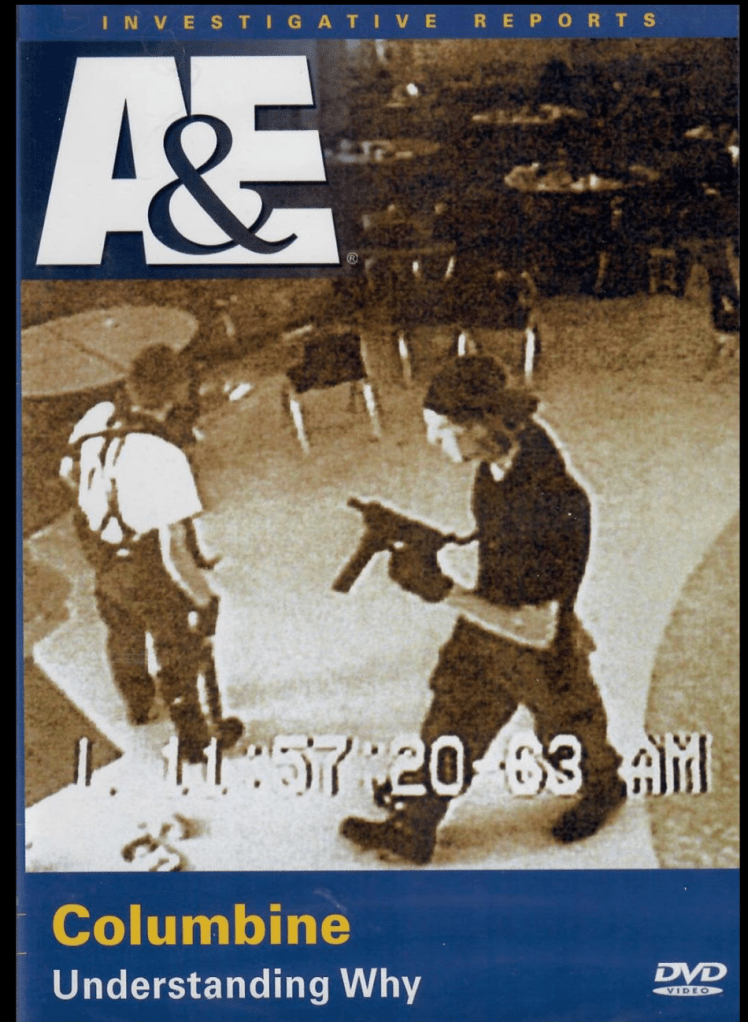
The documentary about the Columbine psychiatric autopsy project aired as part of Investigative Reports, a television series produced by Bill Kurtis for the A&E network.
The series focused on in depth examinations of historical events, criminal cases, and social issues. Episodes typically combined interviews, archival material, and expert analysis to explore complex subjects and present investigative narratives for television audiences.
The Columbine episode, titled Investigative Reports: Columbine – Understanding Why, aired on April 15, 2002, shortly before the third anniversary of the Columbine High School massacre.
The program followed the work of the Threat Assessment Group as its members attempted to conduct a “psychiatric autopsy” of the perpetrators. The project had been initiated by David J. Thomas, who asked the group to analyze the backgrounds and behavior of Eric Harris and Dylan Klebold in order to better understand the motivations behind the attack and identify possible warning signs.
According to contemporary reporting, A&E agreed to finance the investigation in exchange for the rights to produce a documentary/report based on the project.
The correspondence
Several letters from 2001 provide insight into how the Columbine psychiatric autopsy project was organized and implemented. These documents include correspondence between Jefferson County District Attorney David J. Thomas and Colorado Governor Bill Owens, as well as a letter sent by the Threat Assessment Group to individuals connected to Eric Harris and Dylan Klebold requesting interviews.
One of the earliest documents outlining the psychiatric autopsy project is a letter dated July 12, 2001 from David J. Thomas to Colorado Governor Bill Owens. In the letter, Thomas describes a proposed project to conduct a “psychiatric autopsy” of the perpetrators of the Columbine High School massacre. He explains that the study would be carried out by the Threat Assessment Group and asks for the governor’s support in facilitating the research.
Transcript
Office of the District Attorney
First Judicial District
Jefferson and Gilpin Counties
DAVID J. THOMAS
District Attorney
July 12, 2001
Governor Bill Owens
136 State Capitol
Denver, Colorado 80203-1792
RE: Proposed Columbine Project
Dear Governor Owens:
I am writing to let you know about a project that I am supporting, and to solicit your support for this project. Some time ago I suggested that a “psychiatric autopsy” be conducted on the Columbine killers, Eric Harris and Dylan Klebold. Such an examination could provide some answers to the still looming question of “why?” It could provide a look into what went wrong in the lives of these two young men. Just such an examination is now in the works through an organization called “The Threat Assessment Group” (TAG). This group of forensic psychiatrists, psychologists and other professionals is well known and very well respected for its work. Dr. Park Dietz, who is nationally known for his work on cases such as Jeffrey Dahmer, John Hinckley, “the Unabomber”, along with many others, heads the organization. There are extensive materials available about the group and their prior work, and I will certainly provide contact information if you are interested. These experts are particularly experienced in the area of workplace violence and violent behavior.
I have advocated for this project because I believe it can help us answer, in part, many of the nagging questions that linger from the killings at Columbine High School. Just as your Commission helped answer some questions and put us on a track to try and prevent future incidents such as this, I believe this type of project can also help in our future planning efforts.
Professionals working with TAG have already reviewed and catalogued the entire investigative report released by the Sheriff’s Office. They propose to interview many of the people who interacted with Harris and Klebold in the days and months preceding the tragic event. They hope to interview the parents and family members of each young man. Because they are nationally recognized experts without extensive Colorado ties, your support of this project would be important and would help to facilitate many of the interviews and activities that TAG has proposed.
500 Jefferson County Parkway
Golden, Colorado 80401-6020
(303) 271-6800
FAX (303) 271-6888
I believe this project is worthwhile and that TAG has the professional experience to conduct this type of examination and to report the results. TAG has also partnered with Kurtis Productions. The result of their project would be the production of a documentary media piece that will air on A & E. My only role has been to propose the idea to this distinguished group of professionals. They have requested that I assist by contacting you and the Jefferson County School District to provide information about the project and to seek your support. I have agreed to offer my support for the project to help them with gaining access to individuals they hope to interview and other information they hope to analyze. Other than providing office space for the members of TAG and those from Kurtis Productions who will be in Colorado during the week of September 1 through September 9, I have no involvement in the details of the project. I do believe, however, that our joint support of this effort might help the researchers, psychiatrists, psychologists and other professionals obtain access to the information they will need to complete this important project.
I am available to answer any questions you may have. I would suggest that because I am not involved in the details of the project, I could also put you in touch with the members of the Threat Assessment Group. The phone number for TAG is 949-644-3537. Along with my thanks for your prior leadership and efforts to seek answers to Colorado’s tragedy, I want to thank you for your time and consideration of this request.
Sincerely,
David J. Thomas
District Attorney
David J. Thomas explains that he had previously suggested conducting a psychological reconstruction of the perpetrators of the Columbine High School massacre in order to better understand the motivations behind the attack.
Thomas states that the study would be carried out by the Threat Assessment Group, led by forensic psychiatrist Park Dietz. According to the letter, members of the group had already reviewed the Jefferson County Sheriff’s investigative report and were planning interviews with individuals who had interacted with Eric Harris and Dylan Klebold in the period leading up to the attack.
The document also confirms that the project was being developed in partnership with Kurtis Productions and was intended to result in a documentary program to be broadcast on A&E. Thomas emphasizes that his role was primarily to propose the idea and assist the researchers in obtaining access to interview subjects and relevant information.
Several weeks later, Colorado Governor Bill Owens responded to Thomas’s request for support.
Transcript
STATE OF COLORADO
Executive Chambers
136 State Capitol
Denver, Colorado 80203-1792
Phone (303) 866-2471
August 6, 2001
Honorable David J. Thomas
1st Judicial District Attorney
500 Jefferson County Parkway
Golden, CO 80401-6020
Dear Dave:
Thanks for contacting me about the proposed psychiatric review project to be conducted on Eric Harris and Dylan Klebold, the killers in the Columbine High School tragedy. I am pleased to support this intriguing concept as a means to help implement the recommendations of the Governor’s Columbine Review Commission.
As you know, the Commission’s goal was to understand some of the factors that may have contributed to Columbine, and to recommend reforms that might help to avoid future tragedies. A key recommendation of the Commission’s final report was to develop threat-assessment systems that schools and law enforcement can use to predict and prevent potential violence by students. The psychiatric review project you describe could be very helpful in this regard, and to increasing our general understanding of the causes of violence among our young people.
I understand from your letter, and from follow-up conversations between project participants and my office, that the project’s purpose is to conduct a detailed psychiatric examination of the two perpetrators. This “forensic autopsy” will seek not only to better understand some of the specific psychological factors that may have contributed to Harris’ and Klebold’s murderous rampage, but to isolate potential behaviors that might generally be precursors to youth violence. Such information could be valuable in developing the student threat-assessment methodologies and systems that the Commission’s report recommends.
Please keep me informed as the project moves forward and let me or my chief counsel, Troy Eid, know if we can be of assistance. Thanks again and best regards.
Sincerely,
Bill Owens
Governor
Cc: Honorable William H. Erickson
Owens’ response indicates that the proposed psychiatric autopsy project had the support of state leadership and was viewed as potentially contributing to broader efforts to understand and prevent youth violence. In particular, Owens connects the project to recommendations from the Governor’s Columbine Review Commission calling for improved threat assessment systems in schools and law enforcement.
The letter also confirms that the project was intended not only to analyze the actions of the perpetrators of the Columbine High School massacre, Eric Harris and Dylan Klebold, but also to identify behavioral warning signs that might help predict or prevent similar acts of violence in the future.
Shortly after this exchange, members of the Threat Assessment Group began contacting individuals connected to Harris and Klebold to request interviews as part of the research phase of the project.
Transcript
Threat Assessment Group, Inc.
Writer’s Direct Line: 480.250.4601
August 10, 2001
Dear Ms. [redacted]
I am writing to ask for your support and participation in a project that focuses on the Columbine High School tragedy. In August, 1999, David J. Thomas, Jefferson County District Attorney approached Threat Assessment Group, Inc. (TAG), about conducting psychiatric autopsies on Dylan Klebold and Eric Harris. Mr. Thomas explained that he wanted to better understand how the Columbine High School tragedy could have happened.
More than two years have passed since this tragedy occurred. A number of governmental agencies have reviewed the events that occurred on April 20, 1999, and provided instructive feedback about what could have been done differently in response to this tragedy and what can be done to prevent such a tragedy from happening again. Despite these inroads, Mr. Thomas’ question remains unanswered.
TAG is a specialized violence prevention firm comprised of leading authorities in forensic psychiatry, forensic psychology, and criminology. TAG uses educational methods and case interventions to help schools and other employers prevent the harm that comes from harassment, intimidation, bullying, threats, violence, and suicide. TAG’s president, Dr. Park Dietz has participated in such notable cases as those involving John Hinckley, Jeffrey Dahmer, Susan Smith, Polly Klass, the Unabomber, and school shootings in Los Angeles, San Diego, Oregon, and Georgia.
Psychiatric autopsies have been used for years by mental health professionals to understand what drives a person to commit suicide or murder-suicide. A psychiatric autopsy is a detailed retrospective analysis of an individual’s behavior during the months, weeks, days, and hours leading up to death. We believe that by conducting psychiatric autopsies of Eric Harris and Dylan Klebold, we will be able to facilitate a better understanding of what caused the events of April 20, 1999.
537 Newport Center Dr., #300, Newport Beach, CA 92660
phone: 949.644.3537, fax: 949.718.4879 • e-mail: TAGexpert@aol.com
In this particular case, our methodology includes reviewing all investigative reports, autopsy reports, toxicology reports, and physical evidence (including firearms, written materials, reading materials, photographs, videotapes, and visiting the crime scene). In addition, it is our goal to conduct in-depth interviews with Eric Harris’ and Dylan Klebold’s immediate family, friends, and associates, and anyone else who can help us understand these two young men. Areas of inquiry would include, but not be limited to, Harris’ and Klebold’s birth and developmental history, educational history, relationship history (with their parents, siblings, peers, and teachers), employment history, weapons history, psychiatric history, medical history, family medical history, family psychiatric history, religious upbringing, socioeconomic upbringing, juvenile behavioral history, legal history, traumatic childhood experiences, discipline history, substance use history, habits, interests, values, behavior, and plans.
The information will then be synthesized and summarized so as to address Mr. Thomas’ questions, which include, but are not limited to: (1) What precipitated these acts by Eric Harris and Dylan Klebold? (2) Did Eric Harris and/or Dylan Klebold suffer from a psychiatric condition(s), and if so, to what extent did this influence the events of April 20, 1999? (3) What can be learned from careful analysis of this tragedy to help prevent future acts of violence?
Because of the importance of this project and in effort to educate the public about our findings, TAG has partnered with Bill Kurtis Productions to produce a documentary about this project. The program will be a one-hour show, to be broadcast on the A&E network.
When our work is done, we want to offer our findings to the affected families before they are made public. To this end, Kurtis Productions has agreed to notify TAG at least 30 days in advance of the broadcast date to allow time for us to schedule a presentation of our findings to the affected families on the day of the broadcast.
Although it is unusual to have a psychiatric autopsy filmed, we are asking anyone in your family who has information to meet with us so that we can have as complete a picture of the facts as possible in our effort to understand why this tragedy occurred. You are certainly free to decline to be interviewed, to decline to be included in the documentary, or to decline to discuss certain issues. We hope, however, that you will want to contribute your time to this effort, and we would greatly appreciate your cooperation. This project has the support of the Jefferson County District Attorney’s office, Governor Bill Owens, and the Governor’s Columbine Review Commission. (See enclosures)
TAG and Kurtis Productions will be in Denver from September 1, 2001, through September 9, 2001, and we are prepared to work around your schedule. We suggest that you block out two hours to complete the interview process. We will arrange an interview location that is convenient for you. In addition, we recognize that because of the ongoing civil litigation, you may have retained a lawyer. If so, we have no objection whatsoever to your lawyer accompanying you to the interview and sitting off camera during the interview.
Before beginning the interview, you will be asked to sign a program participant release. This is to authorize Kurtis Productions to use your interview in connection with the program and to authorize TAG to use your interview in educational efforts. Also, please note that minors must be accompanied to the interview by a parent or guardian who can sign the release.
Please understand that it is not our intent to inconvenience you. We only ask that you be responsive to the telephone call that you will be receiving some time in the next week inviting you to schedule an interview and participate in this project.
Thanking you in advance for your consideration, I am,
Very truly yours,
Erin M. Spiers, M.A.
Research Director, Columbine Psychiatric Autopsy Project
This letter, written by Erin M. Spiers, research director for the Columbine Psychiatric Autopsy Project, provides descriptions of how the investigation was intended to operate. In the document, Spiers explains that the project was initiated after David J. Thomas approached the Threat Assessment Group in August 1999 to conduct psychiatric autopsies of the perpetrators of the Columbine High School massacre, Eric Harris and Dylan Klebold.
The letter outlines the scope of the research in considerable detail. According to the document, investigators planned to review investigative reports, autopsy and toxicology reports, physical evidence, photographs, videotapes, and written materials. In addition, the team intended to conduct in depth interviews with family members, friends, teachers, and other individuals who had interacted with Harris and Klebold in the months and years leading up to the attack.
The document also describes the central research questions guiding the project, including what factors precipitated the attack, whether either perpetrator suffered from psychiatric conditions that may have influenced their actions, and what lessons might be learned to prevent future acts of violence.
It also confirmed that the project was being conducted in partnership with Bill Kurtis Productions and would result in a one hour documentary to be broadcast on the A&E network. The letter further notes that interview participants could decline to appear in the documentary while still contributing information to the research effort.
Finally, the letter provides a timeline for the fieldwork phase of the project, stating that members of the Threat Assessment Group and the production team would be in the Denver area from September 1 through September 9, 2001 to conduct interviews.
Along with the correspondence shown above, the project was also discussed in several news reports at the time. Transcripts of those articles are included below.
https://www.ctinsider.com/news/article/Columbine-Documentary-Recounts-Dream-7093915.php
In the weeks leading up to the broadcast of the A&E documentary, several news outlets reported on the upcoming program and the findings of the psychiatric autopsy project. One such report appeared in an Associated Press article by Jon Sarche titled Columbine Documentary Recounts Dream, published on March 28, 2002.
The article described the conclusions that researchers from the Threat Assessment Group said they had reached about the perpetrators of the Columbine High School massacre, Eric Harris and Dylan Klebold. According to the report:
“Eric Harris and Dylan Klebold showed signs of depression and violent fantasies two years before their suicidal rampage at Columbine High School, according to an upcoming TV documentary.”
The article explained that the research team had spent approximately one week conducting interviews in the Littleton area and reviewing investigative materials:
“Team members spent a week in the Littleton area in September, interviewing about 50 people, including friends and teachers. They also reviewed police reports, physical evidence, and some video tapes and writings made by Harris and Klebold.”
Psychiatrist Park Dietz summarized several of the motives that the researchers believed contributed to the attack:
“They did it for power and respect and control and revenge… They did it out of anger. They did it as a flashy form of suicide. They did it to gain infamy.”
However, the article also noted that some officials questioned whether the documentary would reveal anything new. Jefferson County School District spokesman Rick Kaufman stated:
“None of the group’s findings uncovered new information.”
Similarly, Superintendent Jane Hammond expressed concern about the impact of the program on the community:
“We believe the project will do very little in the way of unveiling any new information or insights into the tragedy. It does, however, have the potential to unleash more harm and heartache to a school and community that have suffered enough.”
One of the most critical contemporary examinations of the psychiatric autopsy project appeared in the Dave’s Dilemma, published shortly before the third anniversary of the Columbine High School massacre and only a few days after it the report aired. The article placed the project within the broader political and investigative controversies surrounding the aftermath of the tragedy and the role of David J. Thomas.
Prendergast described the pressure facing Thomas at the time:
“Thomas’s multiple missions are on a collision course this week as the third anniversary of the Columbine massacre approaches. With new information about the shootings on the verge of release and embarrassing details leaking out despite Thomas’s efforts to control the flow, the DA is going to need his many hats just to ward off the storm of criticism that is raining down on him from disappointed Columbine families and their supporters.”
The article also included criticism from victims’ families. Brian Rohrbough, whose son Dan was killed outside the school, remarked:
“I think he realizes that, politically, he’s in a bad place right now.”
The report confirmed that the psychiatric autopsy project originated with Thomas himself. According to the article:
“The show had its genesis in Thomas’s request that a group of mental-health experts, the Threat Assessment Group (TAG), study Klebold and Harris in order to develop recommendations to help prevent future school shootings. A&E agreed to fund the effort in exchange for rights to a documentary on the project.”
Prendergast also reported that some Columbine families had expressed skepticism about the project before it moved forward:
“Two years ago, before A&E became involved, Thomas asked Columbine families for their opinions regarding the proposed autopsy, and several said they were skeptical of its value and direction.”
Despite these consultations, the article noted that the decision to proceed may already have been made:
“But according to TAG’s own production chronology, at that point Thomas had already given the team the go-ahead to proceed.”
The article also criticized the scope of the investigation and the resulting documentary. Prendergast wrote that:
“The excruciatingly inept program has been blasted by the hometown crowd for its factual inaccuracies, pompous tone and inch-deep ‘insights’ into the killers’ motivations and prior behavior.”
Another limitation discussed in the article involved access to key evidence:
“The psychological profilers were unable to speak with the parents of the gunmen, obtain their medical records or view the so-called ‘basement tapes,’ the videos Harris and Klebold made discussing their attack plans.”
Finally, the article suggested that the scope of the project avoided examining certain institutional failures preceding the attack:
“One area of inquiry the group conspicuously ignored was any contact authorities had with Klebold and Harris prior to the attack on the school, including the pair’s year-long participation in a juvenile diversion program… Dave Thomas didn’t ask them to look into such matters.”
Despite these criticisms, Thomas defended the project and its conclusions. As quoted in the article:
“It causes us all to do a great deal of introspection… I think that’s good.”
The documents and reporting surrounding the Columbine psychiatric autopsy project suggest that the investigation occupied an unusual space between research, public policy, and television production. While the project was framed as an effort to better understand the causes of the Columbine High School massacre, the correspondence shows that the initiative was also closely tied to the production of a documentary for A&E’s Investigative Reports series. The documents and reporting illustrate how the psychiatric autopsy project was both an attempt to answer lingering questions about the attack and a media driven effort to present those findings to a national audience
 Echoes in the Columbine Archive
Leave a comment